Friday, 6 April 2018

Bridgetown Fabulous Fish Fry

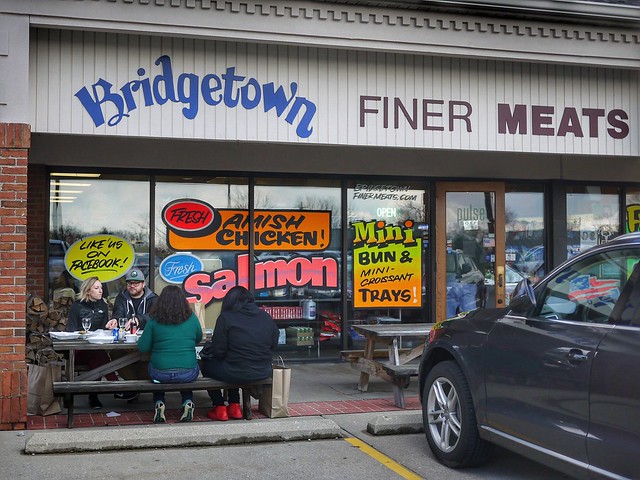
I know the fish fry season is over but I couldn't let it go without talking about Bridgetown Finer Meats. This year we had some really good fish, good enough that I wondered if maybe a couple of the churches had caught up to Bridgetown. But we wouldn't know until Good Friday. Well, I shouldn't have wasted too much thought on it, as I took the first bite of Bridgetown's gigantic sandwich I was amazed that I never remember just how good they are. I know it's not fair to compare a volunteer dinner with trained professionals, but there it is.
Jenni's Homemade Cookies is at the other end of the plaza, and there is a wine tasting happening next door. A stop here is an entire date night.
Set yourself a reminder for next year, if you have never had one of Bridgetown's fish sandwiches you are truly missing out on one of the finer things in life.

Bridgetown Fish Fry
Bridgetown Fish Fry
Bridgetown Fish Fry
Bridgetown Fish Fry
Bridgetown Fish Fry
[where: 45202] best place to learn how to live downtown cincinnati ohio the ethos of Cincinnati
comments?

Wednesday, 4 April 2018

Reds Opening Day Parade

Reds Opening Day Parade
[where: 45202] best place to learn how to live downtown cincinnati ohio the ethos of Cincinnati
comments?

Sunday, 1 April 2018

Balancing Act


It is an exciting time in my trajectory here at Tampa General Hospital. We are in the process of finalizing our new five-year organizational strategic plan (more about that in a future post). After six months on the ground here at TGH and working with my team through the planning process, although I am still learning, I have gotten a good understanding of the organization—its strengths, its areas of opportunity and the places in which we can grow and do better.

My team and I have worked hard to set a vision for the future and define our organizational priorities moving forward. There is a lot of great work ahead—much of it exciting, all of it critical. But let’s face it, change is difficult and it can take a little time for people to get on board. As a result, I have been thinking a great deal about how to balance organizational priorities with winning the hearts and minds of team members. How do you find balance and acceptance with your team while still moving these important initiatives ahead?

I’ve thought about this question a lot throughout my current role, and believe there are three key elements critical to success in this arena:

Be transparent. At every opportunity, reiterate to fellow team members where you are going, what decisions are on the table and the potential impact of those decisions on them and the organization.  Team members want to feel like they have a clear picture on what is happening within the organization. It makes them feel more comfortable and confident in their own performance and willing to accept change and embrace new opportunities.

Communicate with clarity and consistency. It is important to let folks know the why and how of key decisions. When you walk them through your thought process you will show them that your decision wasn’t made in a vacuum and is absent of “political influence.”  You will also help to promote “buy in” and continue to build a trust that is critical in your ongoing relationship.

Encourage thoughts, feedback and diverse perspectives. Team members want and need to be heard. It’s important to find space to allow them to voice their thoughts and opinions. I’m not advocating holding a session where they can simply complain—that is completely unproductive. Instead, during each interaction, ask them to offer their perspective. Not only will this create buy in, it enables them to raise a concern or new idea.  And while it is important that they know the decision ultimately stops with you, allowing them to voice their thoughts and concerns and know that you are listening, will go a long way.

Organizational growth and change is both exciting and critical. But it can also be challenging and uncertain. For those in leadership positions, the best way to navigate and implement new ideas and realign priorities is with a clear and inclusive voice that generates excitement and buy in, while mitigating fear and negativity. It is a balancing act for sure. But when you can strike the right balance, you and your team can move forward with the good work ahead.


Thursday, 29 March 2018

MORTAR Mess Hall at Rosedale

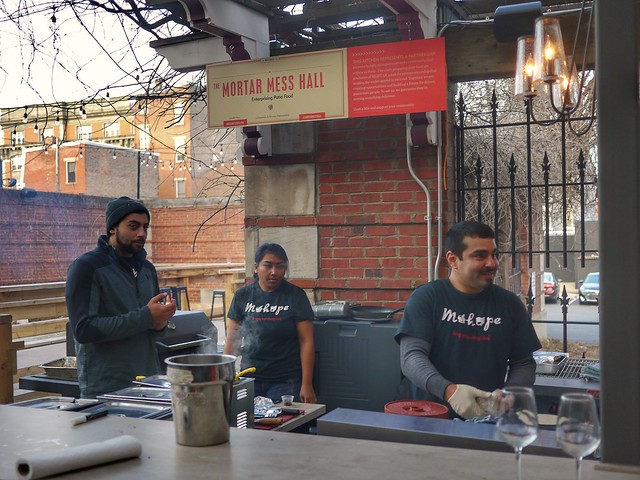
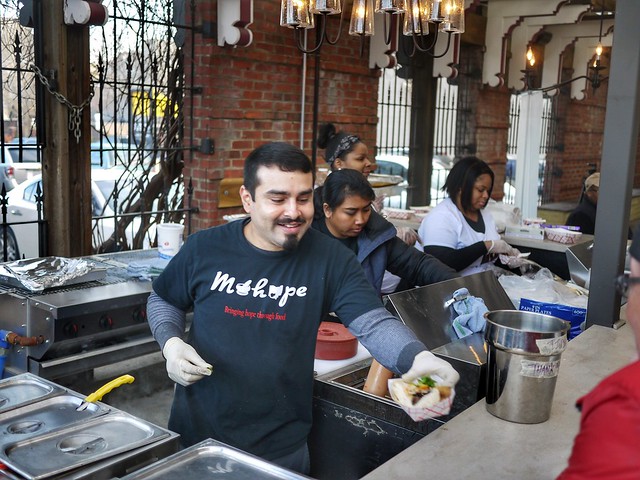
Warm weather is upon us and the outdoor kitchen at Rosedale will no longer sit empty. The MORTAR Mess Hall has opened to provide street style food Wednesday through Sundays. Two graduates of the MORTAR Cincinnati Entrepreneurship Academy - Paityn's Place Soul Food and MaHope Cambodian Cuisine - will be featured. They will be serving entrees as Cambodian tacos with green papaya slaw and tangy sauce; and savory chicken, macaroni and cheese, and a variety of other delightful side dishes.
There will be a soft opening Saturday, March 31st and they officially open on April 4th. Paityn's Place Soul Food will serve food Wednesday and Thursday, MaHope Cambodian Cuisine will be operating Friday through Sunday.

Mortar Mess Hall
Mortar Mess Hall
Mortar Mess Hall
Mortar Mess Hall
Mortar Mess Hall
Mortar Mess Hall
Mortar Mess Hall
[where: 45202] best place to learn how to live downtown cincinnati ohio the ethos of Cincinnati
comments?

Tuesday, 20 March 2018

Can’t We All Just Get Along


It seems that everywhere we look lately, an unwillingness to compromise is bringing progress to a halt. I think that’s because so many folks view an individual or organization’s willingness to seek common ground as a sign of weakness or failure. I would argue, however, that the decision to seek compromise is actually the hallmark of strong leadership.

Think about it. Whether you are negotiating with a team member or competitor, your decision to come to the table and work things out signifies that you are willing to put personal feelings aside and do what is best for your organization and your customers. Compromise offers additional benefits as well, including building trust, gaining greater insight into employees or competitors, the opportunity to lead by example and obtaining a deeper understanding of the challenges you face.

And so, I encourage you to look at compromising as an opportunity instead of a threat. Here are a couple of tips to keep in mind while you are working to find common ground:
  • Listen not to answer, but to really hear: openly listen to the other side and you will learn something invaluable
  • Know your limits and those of others: come to the table knowing what you are willing to agree to and where you will draw your line in the sand
  • Think of new solutions: maybe it is not either or; perhaps the answer lies in a new opportunity or solution
  • Understand the consequences: make sure you have a handle on the repercussions of walking away without reaching a deal 
  • Keep it positive and professional: regardless of the outcome, at the end of the day your reputation and how others view you matters 


The bottom line is that compromising has its advantages and is critical to leadership success. And who knows, you might just gain more than you give.

Friday, 16 March 2018

An amendment that would hurt hospital care


This month, the future of health care in Florida will be in the hands of the Florida Constitution Revision Commission when it decides whether to place the fate of the Certificate of Need program on the November ballot.
While most Floridians have never heard of CON, this regulation has a tremendous impact on the health and well-being of all of the state’s residents. In simple terms, the CON program is a regulatory process designed to limit health care costs and promote planning for new health care services and facilities.
Some elected officials would like to see CON repealed, arguing that deregulating health care would reduce costs and improve quality. I, along with a large majority of my colleagues, disagree. While deregulation may lower costs in a free market, it’s important to remember that hospitals don’t operate in a free market. We don’t set the cost of our services, and we treat everyone regardless of their ability to pay.
We believe that deregulating health care is not good for our community and state. It could trigger a chain reaction that would cause three problems for residents: an increase in health care costs, a decline in the quality of care and a decrease in access to care.
I am the first to admit that CON is a complex issue. It can certainly be hard to understand in a snappy sound bite, and even harder to imagine how it could affect you and your family. So, let’s consider it from the patient’s perspective and examine what things could look like in Florida if CON is repealed:
Scenario 1
Stephanie comes to the hospital to have an outpatient knee replacement procedure performed after the repeal of CON. While CON was in place, her insurer had a set rate it paid for the procedure. But without CON, an influx of new providers could pour into the community and force significant consolidation — meaning health systems could add a number of hospitals across a geographic area, allowing them to negotiate higher reimbursement rates from insurance companies. This higher insurance cost could be passed along to Stephanie through premiums and deductibles. At the end of the day, she could actually pay more for her procedure in a post-CON world. This is the increase in cost of care.
Scenario 2
Mike schedules his brain surgery at his local hospital, an institution he knows and trusts. However, if CON goes away, the number of these surgeries that the hospital performs may drop dramatically. Imagine going from more than 2,000 brain surgeries each year to half as many because new rival hospitals in town do the same procedures. If cases decrease, the hospital’s medical team won’t work together as often. The number of procedures a medical team conducts correlates to quality and outcomes. An increase in volume equates to a higher quality; it’s the old adage practice makes perfect. Lower volume potentially means lower quality. This is the decline in quality of care.
Scenario 3
Patty is having a baby, but she might not be able to go to her local hospital to deliver because the hospital could be forced to discontinue its obstetrics program. With CON in place, many hospitals cross-subsidize obstetrics programs with more profitable programs. But if CON is repealed, the decrease in patient volume and revenue from those services could force the hospital to eliminate several services that make little or no money, including those needed by Patty. This is the decrease in access to care.
As you can see, the repeal of CON has the potential to negatively impact Floridians in a variety of ways. The bottom line is that everyone in our community deserves access to the best, most affordable health care and CON helps to ensure that.

Friday, 2 March 2018

In the Space


When it comes to social media, I strongly believe it can be used as an effective tool for communication. My active engagement on LinkedIn and the way I use my blog as a vehicle to disseminate thoughts on various topics is a clear example of that.

As a result, I read with great interest a recent interviewwith four health care influencers in Becker’s Hospital Review on the power of social media. It specifically discussed how they leverage technology to communicate more effectively.

As I read the interviews with Dr. Josh Luke, Chris Van Gorder, Dave Chase and Don Larsen - all four of whom are incredibly active in the health care social media space - I was struck by the collective similarities in their insights as well as how they mirrored my own. My takeaway was that engagement with social media offers the following benefits:

  • Promotes transparency: gives readers insight into how ‘the sausage is made’.
  • Enables connection with colleagues regardless of geography: you can form an ongoing relationship with thought leaders from across the country.
  • Allows sharing of best practices and serves as a platform to test drive ideas: here you can engage your network on initiatives you are considering prior to implementation. Learnings that come from this can save you from failures down the road.
  • Provides up-to-date insight on trends in the field: for many of us, Twitter followers and LinkedIn connections are like ‘having a personalized research staff’.
  • Offers up a vessel to disseminate health care information much more efficiently: for policy issues, there is nothing more powerful than being able to share information and your stance on an issue via social media.

Like my colleagues, I realize that the first foray into engaging with social media for professional communication can be a bit daunting, but once adopted, there is no denying that it’s a professional tool that can offer tremendous benefits.

Streetlife and foot traffic

The southwest corner of downtown is resident heavy but business thin. That could all be changing soon with 3CDC's purchase of a 1.7-acre...